Overview
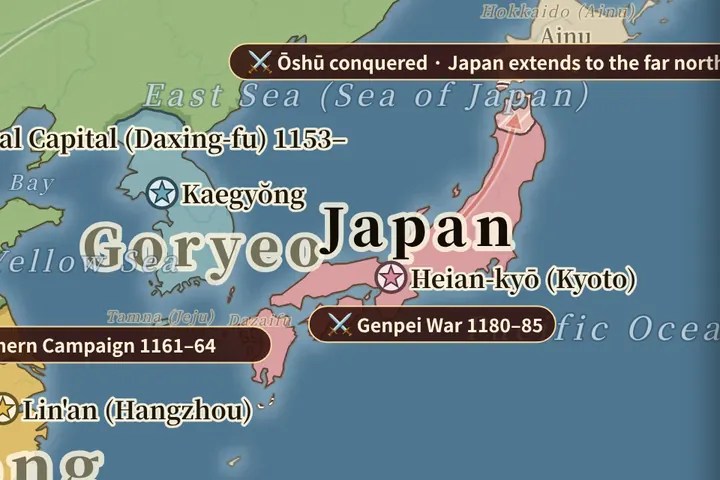
The warrior government founded at Kamakura by Minamoto no Yoritomo after his victory in the Genpei War. Yoritomo was appointed seii taishōgun in 1192.[1]
How it was formed
The Taira were destroyed at the Battle of Dan-no-ura in April 1185. Yoritomo set up shugo, military governors who handled the provinces’ military and police affairs, and jitō, stewards who handled manor revenue and land; this is dated to 1185. He also created bodies such as the mandokoro for administration and the monchūjo for lawsuits.[1]
The founding year
The older view dated the shogunate to 1192, when Yoritomo became shōgun, but the view that it began in 1185, with the shugo and jitō, later became dominant. As of 2016, Japanese textbooks did not give a specific starting year for the Kamakura period.[1][2]
Outcome and impact
The emperor and court remained in Kyoto (Heian-kyō) as nominal authorities, while the shogunate at Kamakura actually governed. After Yoritomo died in 1199, Hōjō Tokimasa became regent (shikken), a post the Hōjō then held by inheritance.[1]
Why it matters
The Kamakura shogunate lasted until 1333, and government by warriors through a shogunate continued under later shogunates until the mid-nineteenth century.[1][3]
References
Further reading
Countries involved
Related records
No linked records.
This content is a reconstruction based on approximate scholarly estimates, and some historical facts may contain errors or be disputed.
About · Sources · Terms of use · Report an error: [email protected]